
Later that afternoon I started going through the cupboards. Not the ones with my gear but the ones built into the lighthouse itself. Cupboards in the kitchen the storeroom under the stairs and the narrow shelf tucked in beside the fuse box. Most were empty or held the expected odds and ends but a few gave me pause.
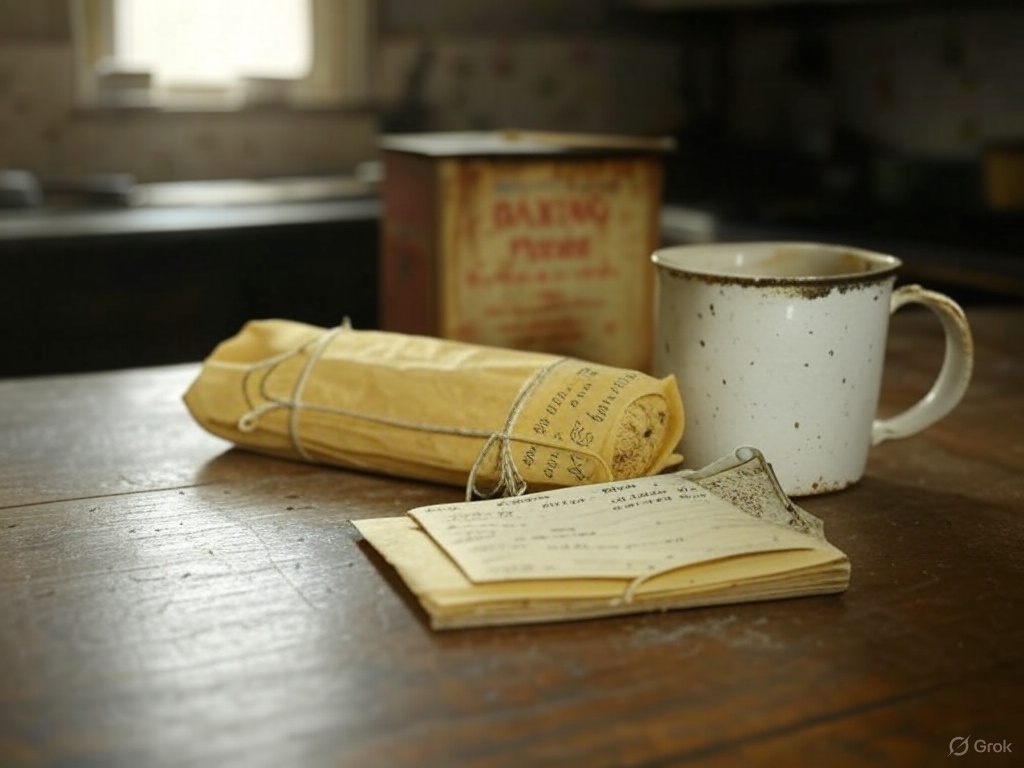
In the galley I found a rusted tin labeled “Baking Powder” in faded red print. It was long expired and lighter than it should have been. Beside it was a bundle of yellowed wax paper tied with string. Inside were handwritten notes. Someone’s recipes by the look of it. Scones and oatcakes and a dense fruit loaf with measurements in ounces. No names no dates. Just spidery script in pencil. I kept them.
The storage cupboard off the stairwell had more useful things. Spare bulbs a coil of thick rope still neatly bound a half-used box of marine grease. Someone had written dates on the inside of the door in marker — maintenance notes by the look of it. The last entry was over a year old. I added a fresh one with the date I arrived. It felt like a quiet promise to keep things in order.
Near the base of the lantern room I found a pair of binoculars tucked behind a folded chart. The lenses were smudged but usable. The chart was marked with tiny X’s along the coast. No key no context. Just a record of something only the last keeper would understand.
I didn’t move anything too far from where I found it. Not yet. There’s a kind of respect to be kept when you take over a place like this. You let it speak first before you start changing it. And that day the lighthouse spoke in lists and forgotten tins and notes in pencil.
Wrapping Up with Key Insights
Places hold memory in what they leave behind. Taking stock of what’s already here isn’t just about supplies. It’s about understanding the rhythm of those who came before. The cupboard inventory reminded me that every item has a story and settling in starts with listening.

Leave a Reply