
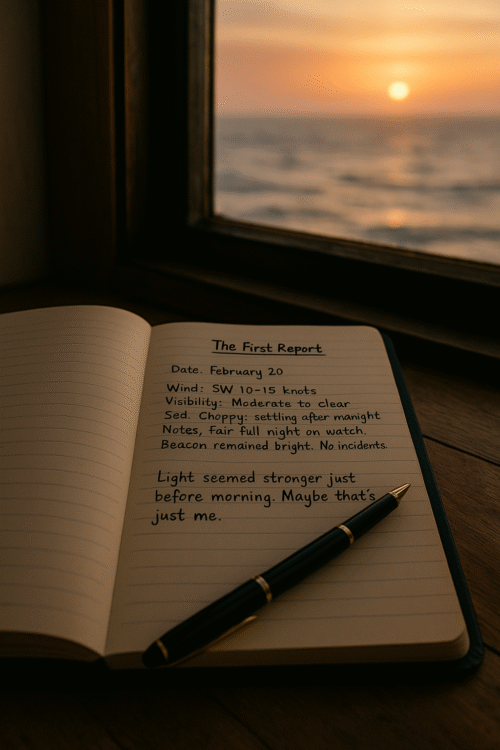
By the time the sun pushed its way over the horizon, I had made it through my first full night on watch. The sky was streaked with soft gray and diluted orange, the sea settling back into itself after a restless evening of low swells and gusty winds. It hadn’t been a dramatic shift, nothing like the stories old keepers tell, but it had still kept me alert. Every creak in the tower, every flicker of the beam, felt significant. I hadn’t slept, not that I expected to.
I made my final round. Then, I stood at the door of the logbook cupboard for a few seconds. After that, I opened it. The book itself was thicker than I imagined. The cover was dark and worn smooth around the edges, the corners softened by years of handling. It was heavier too, as if all those words pressed together carried weight beyond the ink. I brought it over to the little desk by the window where I’d had my coffee a few mornings before and opened it carefully.
There’s something intimate about reading the handwriting of people you’ve never met. The entries were simple but steady: wind direction, visibility, sea state, times the light had been checked. But here and there were small comments that gave glimpses of the people behind the reports. “Bird strike at 0320.” “Seal spotted on southern rocks.” “Beacon steady despite harsh gusts.” I found myself reading further back than I meant to, caught in the rhythm of the keepers before me.
Then it was time to write my own.
I stared at the blank space for longer than I’d like to admit. I wasn’t sure why it made me nervous. It wasn’t like there was a panel of judges reading every word. But still — it mattered. This was the official account, the quiet memory of this lighthouse written one day at a time. I picked up the pen and began.
Date: February 20th
Wind: SW 12–18 knots
Visibility: Moderate to clear
Sea: Choppy, settling after midnight
Notes: First full night on watch. Beacon remained steady. No incidents. Tower secure. Slight temperature drop before dawn.
I paused. Then, under the notes, I added a line that felt more personal than official.
Light seemed stronger just before morning. Maybe that’s just me.
I don’t know if I’ll keep doing that, adding those little observations, but it felt right in the moment. The next entry will move on, focused and factual. That’s how these books work. But I liked knowing that this page was my page. It had been added to the quiet continuity of the place.
I returned the logbook to its cupboard, closed it gently, and took a final look around the room. A little more worn in, a little more mine. The sea outside was calm, the kind of calm you don’t trust too much. But the light was still turning, and I’d written it down. That counts for something.
Wrapping Up with Key Insights
Writing the first report wasn’t just about logging data. It was a moment of stepping into a long line of quiet observers. Each observer added their voice to the steady heartbeat of this place. The lighthouse isn’t just made of stone and wire. It’s built on memory and the daily recording of time passing by the sea. And that first entry marked my place in it.

Leave a Reply